

How will writers respond to this evil?
American literaturaaaagh.

American literature has not shrunk from addressing great crimes, suffering, and injustice. But this feels to me like a historical artifact rather than a vibrant practice.
I’m only superficially versed in literature; many on Substack know far more. Based on my own reading, I feel that “big” books once tackled issues like exploitative capitalism head-on –Sinclair Lewis, John Steinbeck – but lately have become smaller and more focused on ironic detachment or identity exploration. Your Jonathan Franzens and David Foster Wallaces.
Earlier writers dealt directly with war: Hemingway, Mailer, Wouk, Vonnegut, Heller. They wrote from experience. In the 1980s, writers such as Wolfe, McInerney and Easton Ellis skewered Wall Street. They were outsiders, relying on journalistic technique.
James Baldwin, Chester Himes, Toni Morrison and other non-white writers used literature to put the Black experience front and center of American letters and discourse. These are big books, borne of personal tragedy.
There are plenty of other great books. All of them, even the ones that took a flamethrower to mainstream American narrative, operated within the context of American power and success.
And that wasn’t just about brawn. The US has a credible narrative of virtue. It’s not a complete story, of course. The American Revolution was about asserting slaveowner power as well as building a new republic based on liberal values. But America did create the first modern democracy, setting an example that inspired revolutionary leaders around the world (even ones the CIA undermined). We did fight a civil war to end slavery, we did fight for democracy in Europe and Asia, we did help defeat fascism, and we did win the Cold War against Soviet communism.
And our literature, consciously or not, reflects that political evolution. Americans are conditioned to believe in the Revolution and the big narrative. I believe in it. We are better at acknowledging wrongdoing. For the most part, though, the tragic novels that have managed to find an English-language audience come from writers in other countries where shitty things happen. Sometimes because of us, but our ineptitude or violence can be set beside some local despot or commissar’s brutality.
It’s a given that American values are the cognitive backstop of American letters. Protest writing seeks to secure those freedoms for the dispossessed, not overthrow them.
The recent trend of detached, identity-based, quasi-biographical writing is a response to techno-media-capitalism, but it has existed in an environment of abundance. Only a handful of writers have felt the calling to deal, head-on, with what can only be described as evil. Don DeLillo, Cormac McCarthy. Genre writers too: Philip K. Dick, Stephen King, James Ellroy. What is this evil? The one, a secular evil, perpetrated by the American operating system.
Even with these writers, though, there have been limits to that evil, and to their response. They note the American creed, acknowledge the Jeffersonian contradictions, and hope to steer readers and society toward the better angels.
What if the angels have been strangled? Are we a Republic still? Can we be if the apparatus is thoroughly corrupted and bent toward actions that can only be described as evil – crossing the threshold beyond badness or injustice, past actions that can be sufficiently tallied by statistics, into a malevolence that requires a literary understanding, that can marry the philosophical to the personal?
If literature is to be anything more than just an ephemeral entertainment, it must grapple with evil. With this evil. Specifically:
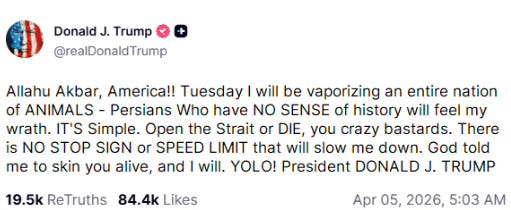
Not every book has to be about current events; novelists are in the business of entertainment too. And literature is not journalism; it requires time, matters need to steep in our minds, take root in our imaginations, before they can be expressed as story.
But how can we not be impacted by the crimes being committed in our names, while the inner circle gamble on their information on public markets, while invoking the second coming of Jesus Christ?
How do we absorb this criminality and reflect it: as witnesses, as analysts, as shrinks, as warriors, as priests? As storytellers? The evil is no longer a compartment. It is no longer a regrettable outcome of a greater victory. It is us. How or whether you voted does not matter: you are being spoken for. Your leader says God told him to skin them alive, and got 85,000 likes. How will you, we, create works that speak back?